War and the State: An Appreciation
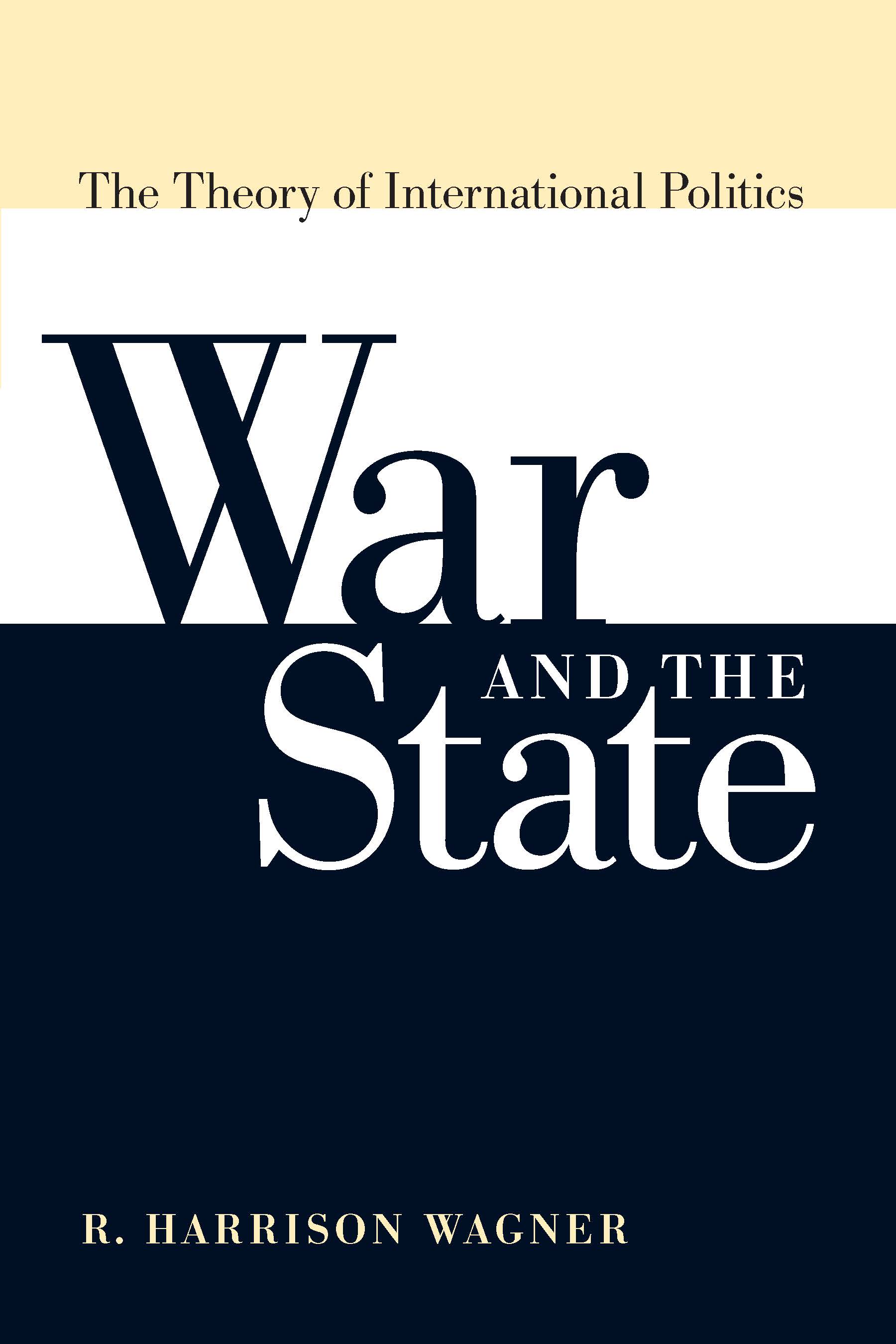
- War and the State: The Theory of International Politics
I’m going through a phase where I’m re-reading books that shaped me in graduate school. Some of this is because of a professional rut, post-upheaval in the move to Sweden. It’s one way I’m trying to get my groove back. Another is because I commute about 45-55 minutes to the office by way of pendeltåg. This not something I’ve ever had to do, but it’s a fact of life for Europeans. It does mean I have more time on my hands, and my hands get to be on my phone or a book instead of a steering wheel. Of the phone and the book, the book seems like a better option.
There are books that had more of an effect on my intellectual trajectory. My orientation toward international politics is deeply indebted to John Vasquez, especially The War Puzzle. John is my “grand-adviser”, if you will, and still one of the most wonderfully curious people I’ve had the good fortune of knowing in the profession. My framework toward thinking about the nexus of domestic politics and conflict has a clear link to classics from Acemoglu and Robinson (2006) and especially Boix (2003). I came across both because my adviser was citing them for his work on territorial peace. The year was 2006 and 2007, peak years highlighting the incompetence of the Bush Administration and the deleterious consequences of fiscal policies that upwardly redistribute wealth. Neither of those were the point of either book, and neither were the slight references in both books to how groups co-opt/purchase the military as insurances against the redistributive demands of the poor. Yet all inform my broader academic worldview. Some of the discrepancies not neatly implied by minimal models of redistributive demands lead to appeals to Fromm (1941).1 You should read Escape From Freedom too.
I only discovered Wagner’s (2007) War and the State much later in graduate school, after comprehensives. It has since become one of my absolute favorite books in international relations. I still return to passages of it and just completed a full re-read of it. We live in a world that we think has become more “realist”, but we are popularizing approaches that were never informative. They were just the center of gravity during the formation of the discipline as we know it. We are giving increasing intellectual real estate to some people of that tradition that have never had an answer to questions we should care to ask. Thus, I think appreciating R. Harrison Wagner’s work is critical today given what the general public consumes, thinks is happening, and what people (students) expect they need to know. War and the State is a necessary read and an important corrective to what students are typically asked to engage with a straight face. Students should read that book in its entirety and complement it with the 2010 symposium in International Theory along with some of his other stuff.
A Synopsis
If nothing else, students should read Chapter 1. Herein, Wagner retraces the intellectual legacy of the largest -isms, prominently so-called “realism” as the center of these -isms. All, prominently “realism”, are offered as explanations of international conflict largely on the basis of arguments with premises that do not imply the hypotheses offered. Questions aren’t answered as much as they are begged. The foundation of the discipline owes to a need to separate the war that happens between states as happening under conditions of “anarchy” that are not applicable to the “hierarchy” of domestic politics. But this obscures more than it reveals. War has never required sovereign states, just groups capable of killing on scale. States might be unique institutions born from war for the cause of killing on scale, but they are neither necessary nor sufficient for war. States are not simply hapless agents under an exogenously given anarchy; they are the organizational solution to a world without a sovereign. This tradition is too eager to misread what it says it reads (c.f. Hobbes and Rousseau), misuse tools (e.g. stag hunt, prisoner’s dilemma) to evaluate perspectives/”approaches” masquerading as theories (see: the relative/absolute gains debate), poorly define what must be properly stated (e.g. “what was bipolarity?”), and assume what needs to be explained (i.e. why war happens at all).
Chapter 2 continues the theme of misreading what it purports to have read (c.f. Herz and Carr’s treatment of idealism/utopianism) by situating realism in a tradition of raison d’état. The treatment here is largely historical and philosophical. Students may find this informative for how much realism takes from Rousseau than Hobbes, per se, how Kant is not that different from Hobbes or Rousseau in how they think about political order and international politics, and how much you’re probably thinking of Charles-Irénée Castel de Saint-Pierre even if you don’t know it yet. However, it concludes by emphasizing international relations arguments that start with a world of sovereign states to explain violence are starting in the wrong place. Sovereign states are outcomes of an early modern (European) period in which people were free to organize themselves in any fashion in order to profit from the use of force. The structure is an outcome of violence, and a hard bifurcation of the domestic from the international won’t get you far. It’s also not the rigid bifurcation discussed in some of these classics from early modern philosophers.
Chapter 3 is as much the argument chapter as any in the book. Here, Wagner brings in the bargaining approach that pervades a lot of the scholarship I like to discuss. Rather than conceptualize a world of sovereign states under systemic anarchy, Wagner conceptualizes a world where states emerge as institutions of roving predators in the protection business selling protection from other predators and from themselves. Violence is ideally the thing to avoid, but violence is the mechanism by which individuals/predators manipulate expectations about the disagreement outcome in a bargaining situation (i.e. what actors would expect to happen if they could not reach an agreement). Thus we emphasize what we know from Carl von Clausewitz. Violence (war) is politics (bargaining) by other means. The Weberian state is the institutional agreement creating that effective monopoly on force. The monopoly is granted by members of the organization who consent and cooperate, in some form, in granting it.
Chapters 4, 5, and 6 extend this framework into an exploration of the conditions for which competing predators may make agreements, when they are enforceable, what capability aggregation implies for questions of opportunistic predation or collective defense (c.f. balancing/bandwagoning), pre-emptive war, and, of course, what this means for different wrinkles in the type of state in question. Perhaps democracies are a class of territorially-satisfied former predators in which leaders are agents and not principals. Even here, hypotheses we put under the democratic peace umbrella come with caveats suggested by the bargaining framework. Great Britain and the Weimar Republic did not fight a war, but the Weimar Republic made Nazi Germany possible. The democracy cannot credibly commit to not degenerating into a non-democracy.2 There is no reason to dismiss, necessarily, that a world of territorially-satisfied democratic states can’t find something else to fight about. It’s sometimes hard to wrap our head around how public goods are supplied at all given the collective action required in providing them (let alone efficiently). That has implications for questions of war and what it means for democracy.
For Students
Wagner is a boon for students who have only known explanations of international relations in the most abstract terms possible. It is convenient to think of a Hobbesian world where life is “solitary, poor, nasty, brutish, and short” absent a Leviathan to “overawe them all.” But, that’s the post hoc philosophical justification for the realist worldview that is much more derivative of Rousseau. Waltz’ inspiration is Rousseau, not Hobbes, and an argument that war happens because nothing stops it from happening is not a convincing argument. It sounds cool, but it’s not convincing. The prisoner’s dilemma is a useful way of getting at cooperation problems, but any game in which players might be eliminated in a repeated prisoner’s dilemma is no longer a prisoner’s dilemma. The prisoner’s dilemma is still nice to know, it can only tell you so much. “Ontology” sounds cool but, oh man, read pages 44 and 45 to see Wagner’s treatment of that term and its use in international relations. Mearsheimer’s five assumptions sound provocative and insightful when stated with the authority with which he states them, but no hypothesis is implied by that whatsoever. Ignore the issue of internal consistency, which were complaints from the likes of Bruce Bueno de Mesquita and John Vasquez in some of their critiques of realism. Arguments should be consistent, but they should be valid as well. The prediction must follow from the hypothesis, but those five assumptions get you nowhere. They barely get you out the starting block. You think they do when you’re beginning in the field, but they don’t get you where you want to go. Students would benefit from reading Wagner to better cut through the noise around them.
Like most things for students who are starting out, following the citations reveal some hidden gems. Wagner is citing some interesting things I’d welcome students to explore. Herz (1951) is nice background for some of the classics, as are Claude (1962), Herz (1950), Hoffman (1963), and Kindleberger (1973). I discovered Wrong (1994) through this book, which featured in one of my publications dealing with the specifics of the Hobbesian argument.
His citations go beyond the strictly, boilerplate IR (or stuff that I’ve used for scholarship). Wagner’s footnotes are a treasure trove of information. Kincaid’s (1986) The Rule of the Road is the inspiration at the start of his second chapter, though it is primarily about the history of left-hand or right-hand driving. Pirenne (2001) is an interesting explanation of the transition to feudal Europe as a result of the rise of Islam (and not the Barbarian conquest of Rome). Bensel (1990) has a fascinating historical account for the rise of the modern American administrative state for the cause of war against the separatist South. The Confederates may not have had the advantages of the North, but they too needed to evolve beyond a simple plantation system to mobilize for war against the North. Grossman (2000) offers a nice academic citation toward conceptualizing a state’s leadership as principal or agent, and the implications of that. Tilly (1985) developed an idea of a state as a protection racket, like a mafia, with a logic that echoes in classics of mafias and racketeer gangs like Gambetta (1993), Varese (2001), Volkov (2000). Finally, Berlin (1998) offers an analysis of the contours of slavery through its evolution in North America. Included in it is a consideration of the agency of the enslaved in shaping this evolution, analogous to the bargaining framework Wagner describes. Wagner’s citations offer plenty of avenues to explore, directly related to international relations or indirectly informative of important frameworks for understanding international relations.
One major obstacle to reading War and the State is that it’s a book that must be re-read as much as it’s read. It’s a challenging read even when English is native. Fearon’s contribution to the 2010 symposium makes a related point that the book is often clearer on what it rejects than what it offers in its place. Likewise, I had to re-read the book to better appreciate the framework Wagner offers. But that does come with a slight apprehension about what questions he’s ultimately asking and answering. I won’t know for sure, but I read this book as if they were expanded lecture notes from a class one might have taken with him at the University of Texas. For students, that’s wonderful. Further along the developmental path, you’re looking harder for the red thread. It’s in there, but the reader needs to search for it. The student will definitely benefit from it.
These comments don’t undercut my plea for students to read and wrestle with this book. R. Harrison Wagner is a pedant after my own heart, but also a scholar with valuable contributions to the bargaining framework of war. The pressing questions of international politics are too important to be begged, and yet we give so much time and energy to those who beg the question they poorly state. Wagner will make that much clear, especially when you have to deal with those people making those claims on television or in print. He’ll also give you information to get you closer to the answers. You should read him.
-
Fromm might be biting off too much from the Freud apple and I’m sure there are psychological correctives to Freud (who was invariably more influential at the time of publication than he is now). Even then, my goodness, the relation of Freud-derivative understandings of sadism and masochism to the petite bourgeoisie in 1930s Germany definitely echo today. ↩
-
Yes, I’m aware I’m an American. I’m also aware the United States cannot credibly past the next phone call. The U.S.—and by extension the world that operates around it—is in a very precarious situation. ↩
Disqus is great for comments/feedback but I had no idea it came with these gaudy ads.